
Last updated Mar 31, 2026.
Qwen 3.5 Omni on Qubrid: Early Benchmarks, Real Improvements, and What Developers Should Expect
7 minutes read

Shubham Tribedi
Qwen 3.5 Omni is on its way to Qubrid. These days, AI developers aren’t easily impressed. Launches, claims, and even benchmarks rarely get them excited. But there’s something intriguing happening with Qwen 3.5 Omni, and it goes beyond just hype. It’s that quiet shift you notice when a model begins to tackle real problems that developers face.
Explore the latest Qwen models already live while you wait:
👉 https://qubrid.com/models
Over the past few days, we've seen early access reports, community excitement, and serious technical curiosity around what this release actually delivers. Unlike the usual feature announcements, Qwen 3.5 Omni is generating attention for something more fundamental: it's the first omnimodal model that genuinely processes text, images, audio, and video natively - without stitching separate models together.
Let's break it down - clearly, technically, and without any fluff.
What Developers Are Already Asking
Before even getting full access, the community is already asking the right questions:
"Can this actually process 10 hours of audio in a single pass?"
"Does it really beat Gemini 3.1 Pro on audio tasks?"
"Can I finally build multimodal agents without managing five different pipelines?"
These aren't random questions - they point directly to the gaps developers felt in previous models. And interestingly, Qwen 3.5 Omni is addressing many of them.
First Look at the Benchmarks
Here's what early benchmark reports indicate when looking at Qwen 3.5 Omni Plus across multiple categories:
215 State-of-the-Art Results
Qwen 3.5 Omni-Plus achieved 215 SOTA results in audio/audio-video understanding, reasoning, and interaction tasks. This isn't just a marketing number - it spans audio comprehension, reasoning, speech recognition, speech translation, and dialogue across multiple independent benchmarks.
Audio Understanding Dominance

👉 Explore further on Qwen's blog: https://qwen.ai/blog?id=qwen3.5-omni
The Plus version surpasses Gemini 3.1 Pro on overall audio comprehension, reasoning, recognition, translation, and dialog. Here's the direct comparison:
Metric | Qwen 3.5 Omni-Plus | Gemini 3.1 Pro | Improvement |
|---|---|---|---|
Audio Comprehension (MMAU) | 82.2 | 81.1 | +1.1 |
Music Comprehension (RUL-MuchoMusic) | 72.4 | 59.6 | +12.8 |
Cantonese WER | 1.95 | 13.40 | 86% better |
General Audio Reasoning | SOTA | Strong | Significant |
Speech Recognition (74 languages) | Superior | Limited | Major gap |
Audio-Visual Comprehension | Comparable | Comparable | On par |
That's not incremental improvement. That's a meaningful gap - especially on underserved languages and music comprehension.
Context Window That Actually Matters
Qwen 3.5 Omni has a maximum sequence length of 256,000 tokens, allowing for input of up to 10 hours of audio or 400 seconds of audiovisual data. This is 8x larger than the previous generation's 32K context.
What this means in practice? You can process entire meetings, webinars, or video content in a single inference call. No chunking. No context stitching. No information loss.
Speech Generation Quality
On multilingual voice stability benchmarks, Qwen 3.5 Omni-Plus beat ElevenLabs, GPT-Audio, and Minimax across 20 languages. And it includes voice cloning capabilities with 55 available voices, including scenario-specific, dialectal, and multilingual options.
So… What Actually Changed From the Previous Generation?
Qwen 3 Omni Flash was good. But it had constraints. Here's what improved:
Key Improvements: Qwen 3.5 Omni vs Qwen 3 Omni Flash
Feature | Qwen 3 Omni Flash | Qwen 3.5 Omni | Change |
|---|---|---|---|
Context Window | 32K tokens | 256K tokens | 8x larger |
Audio Input | Up to 1 hour | Up to 10 hours | 10x capacity |
Languages (Speech Recognition) | 11 languages | 74 languages + 39 dialects | 6x+ expansion |
Architecture | Standard MoE | Hybrid-Attention MoE | More efficient |
Voice Options | Limited | 55 voices available | Full customization |
Semantic Interruption | Not supported | Native support | Major UX improvement |
Real-time Web Search | No | Yes | Current info built-in |
Audio-Visual Reasoning | Basic | Advanced reasoning | Much better |
Voice Cloning | Not available | Full support | New capability |
Speech Latency | ~234ms | Ultra-low | Faster interaction |
The shift from fixed MoE architecture to Hybrid-Attention MoE means both the Thinker and Talker components now use intelligent expert routing. It processes inputs faster, understands content deeper, and maintains context across longer sequences without degradation.
This feature shipped without specific training, which tells you something about what the model learned from 100+ million hours of training data.
The model can watch a screen recording or video of a coding task and write functional code based purely on what it sees and hears, no text prompt required.
Real use case: Record a UI mockup being drawn, show the model what you're building, and it generates working code. No screenshots. No descriptions. No manual steps.
This isn't a parlor trick - developers are already using this in production for rapid prototyping.
Is This Really Omnimodal or Just Multimodal?
So, there's a difference....
Multimodal = handling multiple input types, often through separate processing paths.
Omnimodal = native, unified architecture that processes all modalities simultaneously with cross-modal reasoning.
Qwen 3.5 Omni is truly omnimodal! When you feed it video with embedded subtitles, speaker changes, and background music, it doesn't:
Extract frames and run vision
Extract audio and run speech-to-text
Extract text and run OCR
Combine results
Instead, it processes everything natively in a single unified representation. The entire model understands that the visual, audio, and text elements belong together temporally and semantically.
This matters because traditional approaches lose information in the translation between modalities. Omnimodal approaches preserve it.
Real-World Performance: What We're Actually Seeing
From early access reports:
Single-Pass Processing
A 5-minute YouTube video that ChatGPT 5.4 took 9 minutes to analyze through separate models, Qwen 3.5 Omni processed in about 1 minute. Same quality output. Different architecture.
Semantic Interruption (Small Feature, Big Impact)
Qwen 3.5 Omni now supports semantic interruption: It can tell the difference between you saying "uh-huh" mid-sentence and actually wanting to cut in, so it won't stop mid-thought every time someone coughs.
For conversational AI and voice agents, this is game-changing. No more accidental interruptions from background noise.
Real-Time Web Search
The model can autonomously determine when to search for current information, then incorporate it into responses. You're not getting stale information about breaking news or live market data.
Language Support Explosion
Qwen 3.5 Omni significantly expands language support: 113 languages/dialects for speech recognition and 36 for speech synthesis. That's from 11 languages in the previous version.
What This Means for Builders on Qubrid AI
When Qwen 3.5 Omni lands on Qubrid, this is what changes for developers:
You can build systems that:
Process 10-hour meetings without tokenization headaches
Extract structured data from video without preprocessing pipelines
Understand multilingual content across 113 languages natively
Maintain quality across text, image, audio, and video in single inference
Generate audio output with voice cloning and emotional tone control
In other words:
👉 Less infrastructure complexity, more functionality
Why Start Now (Not When Full Access Launches)
By the time most developers get access to a new model, early adopters have already:
Found the optimal prompt structures
Built internal tooling optimized for the model's strengths
Hit edge cases and learned workarounds
Optimized inference costs through experimentation
Shipped features competitors haven't even considered
Qwen 3.5 Omni is one of those releases where small advantages compound fast.
Jump into the platform and start building immediately:
👉 https://platform.qubrid.com/models
Final Take
Qwen 3.5 Omni is not just another model iteration. It's a shift toward:
Native omnimodality - not stitched-together approaches
Long-context capability - processing hours of content natively
Practical performance - beating competitors on audio, matching on visual
Developer simplicity - fewer models, fewer pipelines, less to manage
The benchmarks are impressive. The real-world reports are compelling. The community is building with it. And the direction is clear: this is what production multimodal infrastructure looks like.
Now it's just a matter of what you build with it. Share your feedback on what you're building with Qwen models on Qubrid AI.
Related posts
View all posts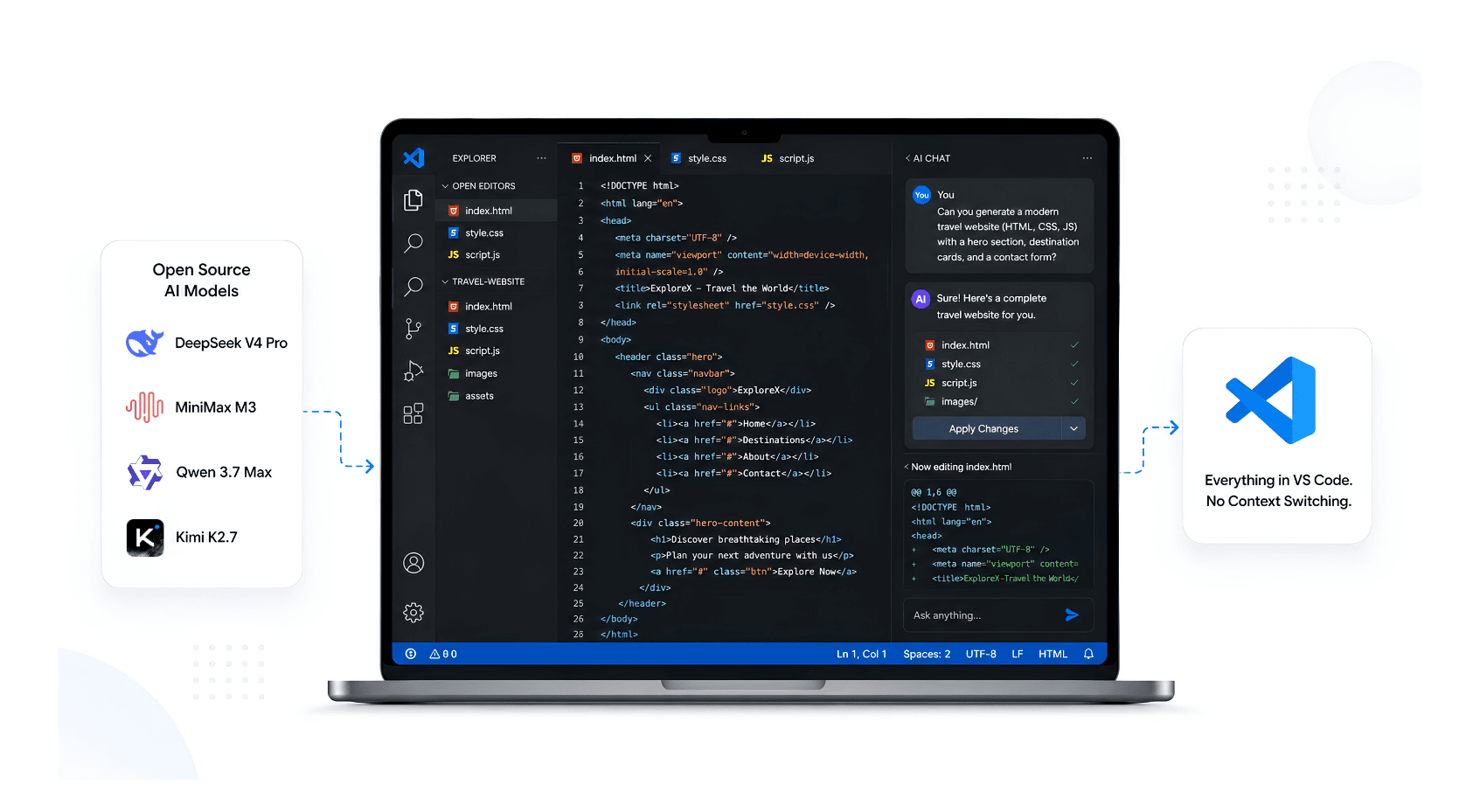
How to Use Open Source AI Models Directly in VS Code (Without Switching Tools)
Stop context-switching between your editor and AI chat tools. Here's how to run open source models like GLM-5.2, DeepSeek, and Llama 4 natively inside VS Code using Qubrid's inference API
 Shubham Tribedi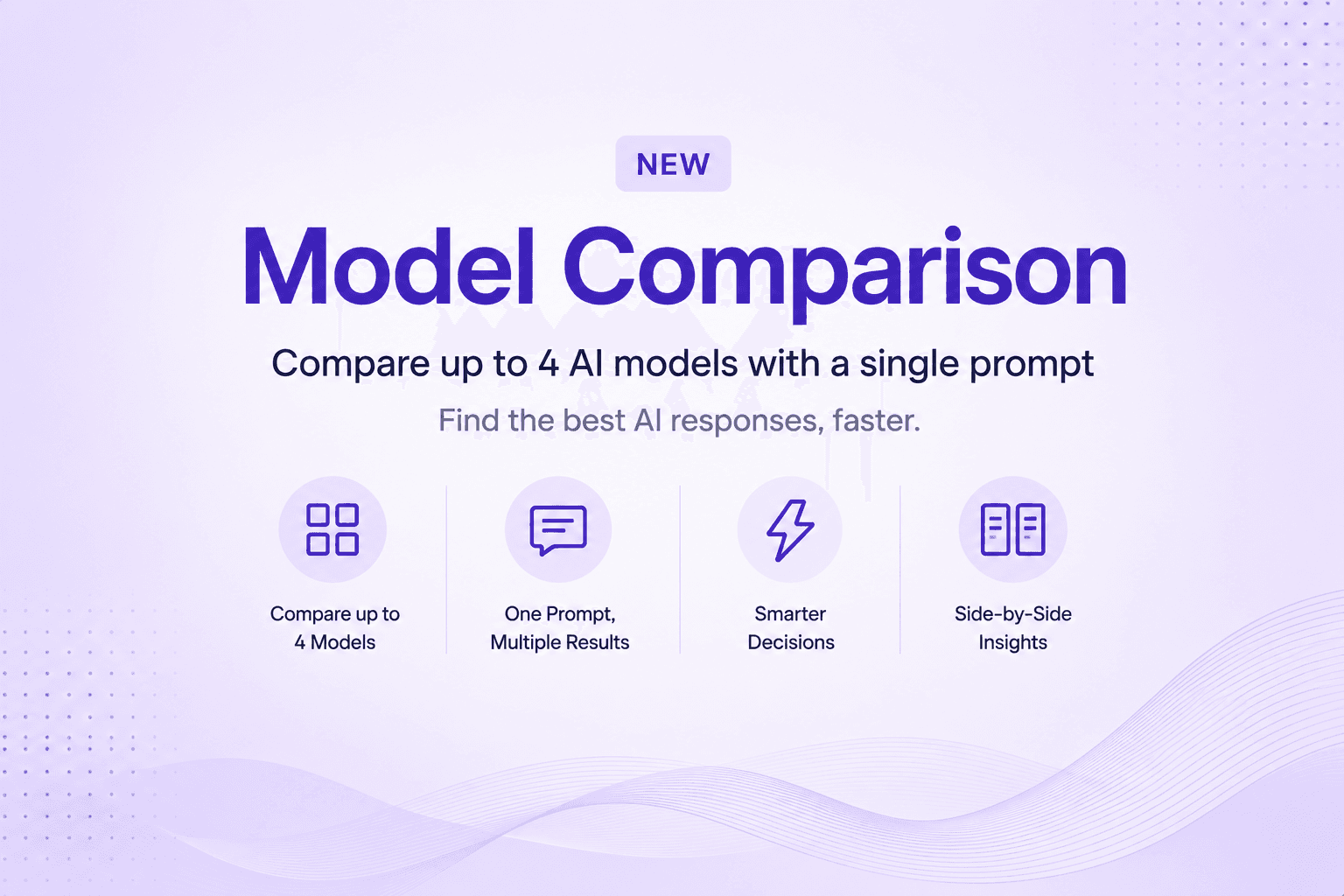
Stop Guessing. Compare AI Models Side-by-Side
One prompt. Up to four models. Real-time responses, latency, cost, throughput - everything you need to make the right AI decision, finally in one place.
Shubham Tribedi